

Mtakuja Village Project
Empowering communities for a sustainable future in Kilimanjaro, Tanzania
Project Overview
The Mtakuja Village Project started out in 2008 with the goal to reduce poverty levels among the community of Mtakuja Village in the Kilimanjaro Region in Northern Tanzania, populated, at the time, at 4,250. With a small staff and through an integrated approach to development, FTK simultaneously introduced interventions in agriculture, infrastructure, health and education and programs to encourage and strengthen local leadership and project ownership. Goals were formulated around short term – “quick wins” – and long-term objectives to solidify local belief in the viability of and support for the project and laying the foundation for the sustained impact of the project’s interventions.
Seven and a half years later the results are largely positive and there is reason to be optimistic about the sustainability of the effect into the future. By the end of 2015 the newly developed irrigation farm produced around €100,000 worth of annual food crops, including the production of about 40% of the entire community’s annual consumption of maize, the basic staple. The number of families surviving on one meal a day was halved, while those being able to rely on three meals a day increased by 80%. Severe malnutrition rates in newborns were halved by 2013. Asset ownership, including productive assets like livestock, increased across a range of assets and there is some indication that the growth in asset ownership in Mtakuja outstripped national levels of growth.
Project Overview
Total Investment
€1,004,000
Project Period
2008-2015
7.5 years of development
Overview of Program Expenses
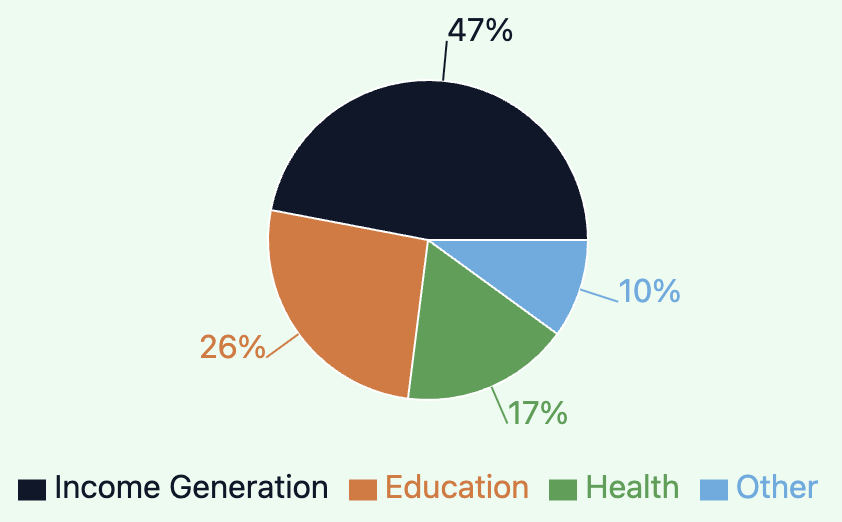
In terms of financial inputs, since 2008, we have invested about €1,040,000 in programs and program staff dedicated to Mtakuja. The chart on the right provides the breakdown of the investment by sector. These investments do not include in-kind or financial contributions from the community, which are significant over time, but do include in-kind services provided by TPC in the form of road construction and rehabilitation (included in “other”). All infrastructure investments related to the farm (and drinking water supply) are included in the Income Generation sector, hence its large share of the total expenses. Tanzanian government financial support, from national or lower level authorities has amounted to approximately €100,000, of which about 45,000 in cash and the remaining amount in the form of VAT/Tax exemptions that were granted to FTK.
The Impact in Numbers
120
Acres
of unproductive land developed for year-round irrigation farming.
50%
decrease
80%
Increase
50%
decrease
40%
of annual maize consumption
40%
increase
90%
increase
89%
of households agree
Community Satisfaction & Quality of Life
The community is indicating a general sense of improvement in their families’ living situation. Surveys show a 40% increase from 2010 to 2015 in the percentage of people reporting some level of satisfaction with their life (life mid and a 90% increase in the share that is satisfied with their financial situation. These findings presumably imply a level of increased hope and belief among the people of Mtakuja in life’s possibilities and opportunities. More hope and less despair are good things.
90%
89%
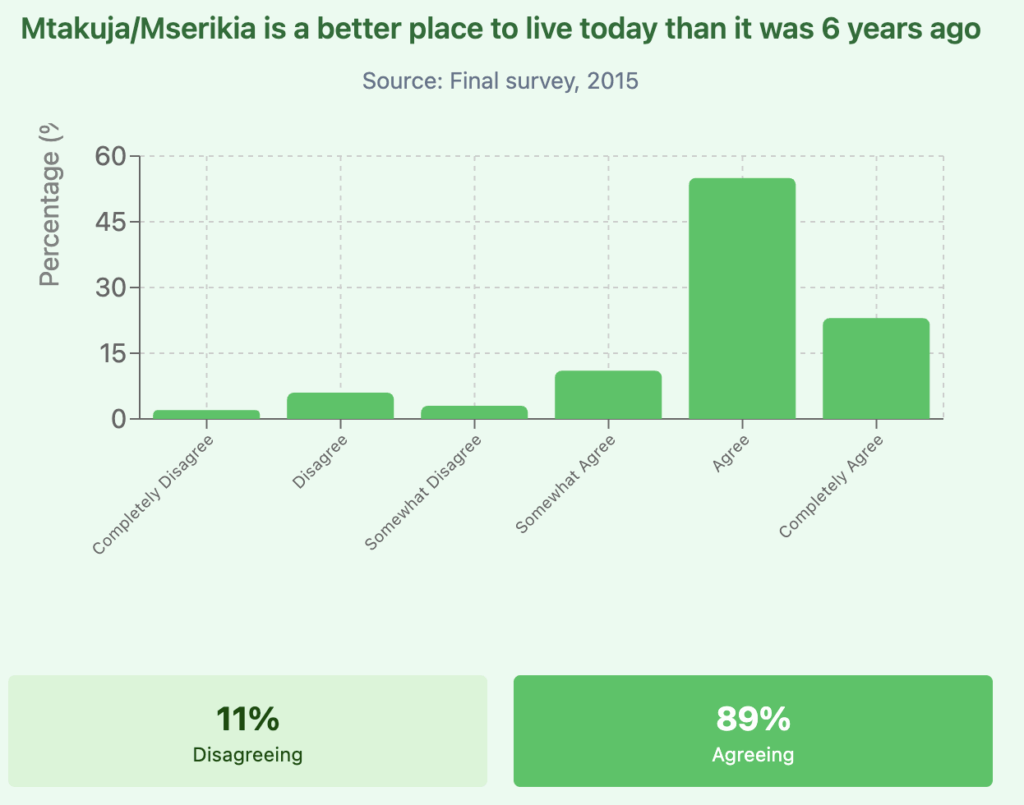
of the heads of households agree that Mtakuja is a better place to live in 2015 than in 2008.